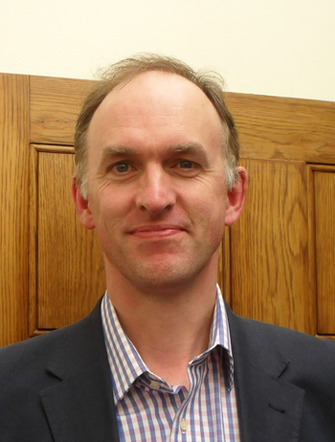
The Xunta de Galicia expresses its sorrow at the death of Professor Simon Barton, member of the International Committee of Experts on the Way of St James

The Xunta de Galicia was extremely saddened to receive the news of the recent death of Professor Simon Barton. The professor had been a member of the International Committee of Experts on the Way of St. James since 2014, with his intellectual and personal merit enabling him to make a significant contribution during this period.

Professor Barton was known for his efforts in promoting the Way of St James in Great Britain, where he worked with Turismo de Galicia on several activities. In his new position in Florida, United States, he had also began working to disseminate information about the pilgrimage to Santiago. He was on the editorial board of the magazine Ad Limina, to which he also contributed, as well as the most recent conferences organized by the International Committee of Experts on the Way of St. James, Maria y Iacobus en los caminos xacobeos (2015) and Jacobus patronus (2017).

Professor Simon Barton (1962) was a professor of medieval history at the University of Exeter (United Kingdom) and since early 2017, a professor at the University of Central Florida (USA). His works include Conquerors, Brides, and Concubines: Interfaith Relations and Social Power in Medieval Iberia; A History of Spain; Cross, Crescent and Conversion: Studies on Medieval Spain and Christendom in Memory of Richard Fletcher; The world of El Cid; and his doctoral thesis, The aristocracy in twelfth-century Leon and Castile.

Professor Barton received a number of honorary recognitions and awards, including President of the Society for the Medieval Mediterranean, Fellow of the Royal Historical Society, winner of the Premio Del Rey given by The American Historical Association, member of The Royal Historical Society and corresponding member of the Real Academia Matritense de Heráldica y Genealogía.

Turismo de Galicia expresses its sorry at this loss, which is added to that of Robert Plötz this past summer, depriving Galicia and the Way of St James of an excellent researcher and promoter. We offer our deepest sympathies and solidarity to his family and friends.

Leave a Comment

Privacy Summary

This blog uses its own cookies, necessary for its proper functioning, and third-party cookies for analytical purposes.

A cookie is a small text file that a website/blog can download to a computer for the purpose of obtaining and retrieving information when you browse. Its purposes are varied, for example, recognizing you as a user, obtaining information about your browsing habits or personalizing the way in which the content is displayed.

The different types of cookies used in this blog can be classified into the three categories indicated below. Having said this, it is necessary to take into account that the same cookie can be included in more than one category.

Types of cookies according to the period of time they remain activated:

Session cookies: they are created temporarily and are deleted once the website/blog is left.
Persistent cookies: they remain in the browser for a set period of time and are activated each time the website/blog that created that cookie is visited.

Types of cookies according to the entity that manages them:

Own cookies: those sent to your computer and managed exclusively by the Xunta de Galicia, which only obtains and keeps information related to session data and language. These are necessary for the correct functioning and visualization of the portal/blog by the users.
Third-party cookies: when they are sent from a domain managed by another entity other than the Xunta de Galicia.

Types of cookies according to their purpose:

Technical cookies: those that allow the user to navigate through the portal and the use of the services available on it.
Analytical cookies: those that allow the measurement and analysis of the behavior of the users in the portal in order to introduce improvements in it.
Preference cookies: those that allow information to be remembered and personalize the experience of users, such as the chosen language.