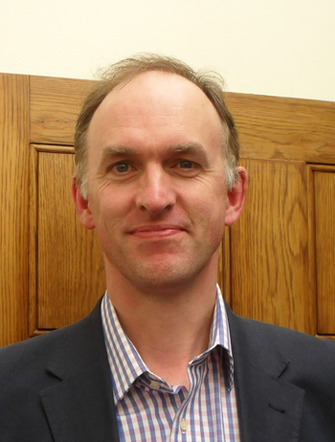
La Xunta de Galicia fait part de sa tristesse pour la mort du professeur Simon Barton, membre du Comité International d’Experts du Chemin de Saint Jacques

La Xunta de Galicia a reçu avec une grande tristesse la nouvelle du décès du professeur Simon Barton, qui, depuis 2014 faisait partie du Comité International d’Experts du Chemin de Saint Jacques, auquel il avait apporté au cours de cette période son importante collaboration pour sa valeur intellectuelle et personnelle.

Il convient de distinguer son travail de diffusion du Chemin de Saint Jacques en Grande Bretagne, où il a collaboré avec Turismo de Galicia dans des activités diverses. Dernièrement, dans sa nouvelle étape en Floride (États-Unis), il avait également commencé ce travail de divulgation du pèlerinage jacobée. Il faisait partie du conseil éditorial du magazine Ad Limina, à laquelle il participait, de même qu’aux derniers congrès organisés par le Comité International d’Experts du Chemin de Saint Jacques, Maria et Iacobus sur les chemins jacobée (2015) et Jacobus patronus (2017).

Le professeur Simon Barton (1962) professeur d’université d’histoire médiévale à l’University of Exeter (Royaume-Uni) et, depuis début 2017, professeur à l’University of Central Florida (USA). Il a écrit, entre autres œuvres Conquerors, Brides, and Concubines : Interfaith Relations and Social Power in Medieval Iberia ; A History of Spain ; Cross, Crescent and Conversion : studies on medieval Spain and Christendom in memory of Richard Fletcher ; The world of El Cid ainsi que sa thèse de doctorat The aristocracy in twelfth-century Leon and Castile.

Il a reçu des reconnaissances honorifiques et des prix tels que celui de président de la Society fuere the Medieval Mediterranean, conseille de la Royal Historical Society, gagnant du prix Del Rey accordé par The American Historical Association, membre de The Royal Historical Society et académicien correspondant de la Real Academia Matritense de Heráldica y Genealogía.

Turismo de Galicia fait part de sa tristesse pour cette perte, qui s’ajoute à celle de Robert Plötz l’été dernier, et prive la Galice et le Chemin de Saint Jacques d’un excellent chercheur et divulgateur, et présente ses condoléances à ses proches.

Laisser un commentaire

Privacy Summary

This blog uses its own cookies, necessary for its proper functioning, and third-party cookies for analytical purposes.

A cookie is a small text file that a website/blog can download to a computer for the purpose of obtaining and retrieving information when you browse. Its purposes are varied, for example, recognizing you as a user, obtaining information about your browsing habits or personalizing the way in which the content is displayed.

The different types of cookies used in this blog can be classified into the three categories indicated below. Having said this, it is necessary to take into account that the same cookie can be included in more than one category.

Types of cookies according to the period of time they remain activated:

Session cookies: they are created temporarily and are deleted once the website/blog is left.
Persistent cookies: they remain in the browser for a set period of time and are activated each time the website/blog that created that cookie is visited.

Types of cookies according to the entity that manages them:

Own cookies: those sent to your computer and managed exclusively by the Xunta de Galicia, which only obtains and keeps information related to session data and language. These are necessary for the correct functioning and visualization of the portal/blog by the users.
Third-party cookies: when they are sent from a domain managed by another entity other than the Xunta de Galicia.

Types of cookies according to their purpose:

Technical cookies: those that allow the user to navigate through the portal and the use of the services available on it.
Analytical cookies: those that allow the measurement and analysis of the behavior of the users in the portal in order to introduce improvements in it.
Preference cookies: those that allow information to be remembered and personalize the experience of users, such as the chosen language.